
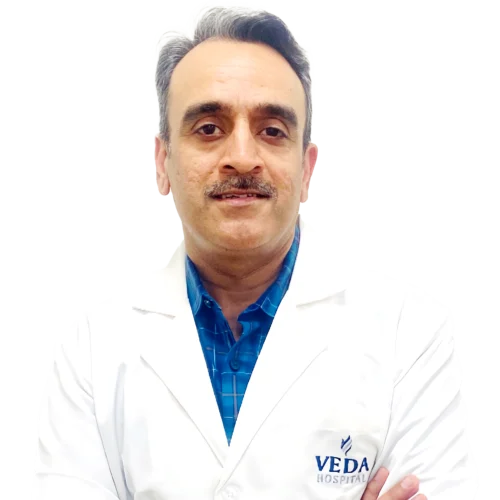
Dr. Pankaj Ailawadhi
Consultant Neurosurgery
Neurosciences: Mapping the Path to Recovery
Neurological disorders require a high level of diagnostic accuracy and delicate intervention. Our team of neurologists and neurosurgeons works in tandem to provide comprehensive care for everything from chronic headaches to life-threatening brain tumors.
Our Clinical Specializations
1. Advanced Neurosurgery
We utilize “Microsurgery” techniques, using high-magnification microscopes to operate on delicate neural tissues.
- Brain Tumor Excision: Removal of benign and malignant tumors using intra-operative mapping to protect speech and motor functions.
- Neuro-Vascular Surgery: Expert management of brain aneurysms, Arteriovenous Malformations (AVMs), and bypass surgeries.
- Functional Neurosurgery: Surgical interventions for movement disorders like Parkinson’s Disease (Deep Brain Stimulation) and refractory Epilepsy.
2. Comprehensive Spine Surgery
Our “Spine-First” approach prioritizes non-surgical management, moving to advanced surgery only when necessary.
- Minimally Invasive Spine Surgery (MISS): Treating slipped discs and spinal stenosis through incisions smaller than 2cm, leading to faster discharge.
- Spinal Deformity Correction: Expert correction for Scoliosis and Kyphosis in both pediatric and adult patients.
- Spine Trauma: 24/7 emergency stabilization for spinal fractures and spinal cord injuries.
Cutting-Edge Neuro-Technology
To ensure the highest safety standards, Veda Hospitals is equipped with:
- Neuro-Navigation System: Similar to GPS for the brain, allowing surgeons to visualize the exact location of a tumor in real-time.
- Intra-operative Neuromonitoring (IONM): Constantly monitoring nerve signals during surgery to prevent any accidental nerve damage.
- 3T MRI & 128-Slice CT: High-definition imaging that allows for “Functional MRI” and “Tractography” to map brain pathways.
- Biplane Cath Lab: For “Endovascular Neurosurgery,” where we treat strokes and aneurysms via a small puncture in the groin, avoiding traditional open-brain surgery.
Specialized Care Units
| Unit | Focus Area |
| Stroke Unit | Rapid-response team for “clot-busting” (Thrombolysis) and mechanical thrombectomy. |
| Neuro-ICU | Dedicated intensive care managed by Neuro-intensivists for post-op and trauma patients. |
| Comprehensive Epilepsy Center | Advanced EEG monitoring and medical/surgical management of seizures. |
| Neuro-Rehabilitation | Physiotherapy, speech therapy, and occupational therapy to regain independence. |
When to See a Specialist?
You should consult our Neuroscience team if you experience:
- Persistent or sudden severe headaches.
- Unexplained numbness, tingling, or weakness in limbs.
- Chronic back or neck pain radiating down the legs (Sciatica).
- Changes in vision, speech, or sudden memory loss.
- Loss of balance or frequent dizzy spells.
Frequently Asked Questions
1. Is spine surgery risky?
With modern neuro-navigation and intra-operative monitoring, the risks are significantly minimized. Most patients are encouraged to walk within 24 hours of a minimally invasive spine procedure.
2. What is the “Golden Hour” in Stroke care?
The first 4.5 hours after a stroke are critical. If treated within this window at our Stroke Unit, the chances of reversing paralysis or brain damage are significantly higher.
3. Do you offer non-surgical treatments for back pain?
Yes. Over 80% of our spine patients are successfully treated through specialized physiotherapy, pain management injections, and lifestyle modifications.
Leave a Reply