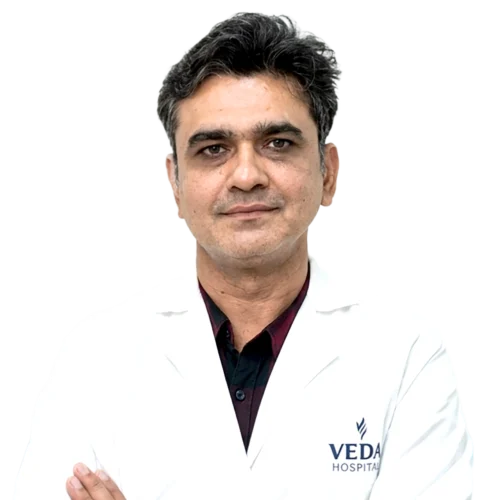
Dr. Ramesh Kaswan
Consultant Surgical Oncology
Precision Surgery: The Art of Eradication | Best Hospital in Hisar for Critical Cancer Surgeries
At Veda Hospital, our surgical oncologists are more than just surgeons; they are specialists trained to understand the biology of cancer. Whether it’s a routine biopsy or a complex multi-organ resection, our goal is to achieve clear margins (removing all cancer cells) while preserving as much healthy function and aesthetics as possible.
Our Specialised Surgical Approaches
We prioritise techniques that promote faster recovery and reduce postoperative pain.
- Minimally Invasive Surgery (MIS): Using laparoscopy or “keyhole” surgery to perform major procedures through tiny incisions.
- Organ-Preserving Surgery: Whenever possible, we focus on removing the tumor while saving the organ (e.g., Lumpectomy for breast cancer or limb-salvage surgery for bone tumors).
- Cytoreductive Surgery & HIPEC: A specialised procedure for advanced abdominal cancers where tumors are surgically removed, followed by “heated chemotherapy” bathed directly in the abdominal cavity.
- Reconstructive Oncology: Working alongside plastic surgeons to restore form and function immediately after tumor removal (essential in Head & Neck or Breast cancers).
Cancers Managed Surgically
Our surgical team provides expert intervention for a wide array of conditions:
- Speciality Common Procedures
- Breast Oncology Mastectomy, Sentinel Lymph Node Biopsy, Oncoplasty.
- Gastrointestinal Esophagectomy, Whipple Procedure (Pancreas), Liver Resections.
- Head & Neck Thyroidectomy, Parotidectomy, Microvascular reconstruction.
- Gynecologic Radical Hysterectomy, Debulking for Ovarian Cancer.
- Thoracic Lung Lobectomy, Mediastinal tumor excision.
The Veda Surgical Journey
We ensure you are never “just a case number.” Our surgical pathway is designed for safety and transparency:
- Pre-Surgical Optimisation: Our nutritionists and physiotherapists prepare your body to ensure you are “fit for surgery,” reducing the risk of complications.
- Intra-Operative Accuracy: We utilise advanced imaging and frozen-section pathology (real-time biopsy) during surgery to confirm that all cancer has been removed before you leave the operating room.
- Enhanced Recovery After Surgery (ERAS): A protocol-driven approach to post-op care that helps you get back on your feet, eating, and moving sooner than traditional methods.
State-of-the-Art Operating Theatres
Our surgical suites are equipped with:
- High-Definition Imaging: For crystal-clear visualisation during laparoscopic procedures.
- Advanced Hemostatic Tools: To minimise blood loss and reduce the need for transfusions.
- Integrated ICU Support: Immediate transition to specialised post-surgical intensive care for high-risk cases.
Frequently Asked Questions
- Is surgery always the first step?
Not necessarily. Sometimes, “neoadjuvant” therapy (chemo or radiation) is used first to shrink a tumor and make the surgery safer and more effective. - How long is the recovery period?
This depends on the procedure. Minimally invasive surgeries may allow you to go home in 2–3 days, while major abdominal surgeries may require a week of hospital observation. - Will I have a lot of scarring?
Our surgeons are trained in aesthetic closure techniques. For many cancers, we use hidden incisions or minimally invasive methods to keep scarring to a minimum.
Leave a Reply